This copy includes a set of interleaved drawings and a silhouette of Cowper by the original owner, John Higgins. He was an admirer of Cowper and a talented amateur artist.
Search FNL grants since 1931
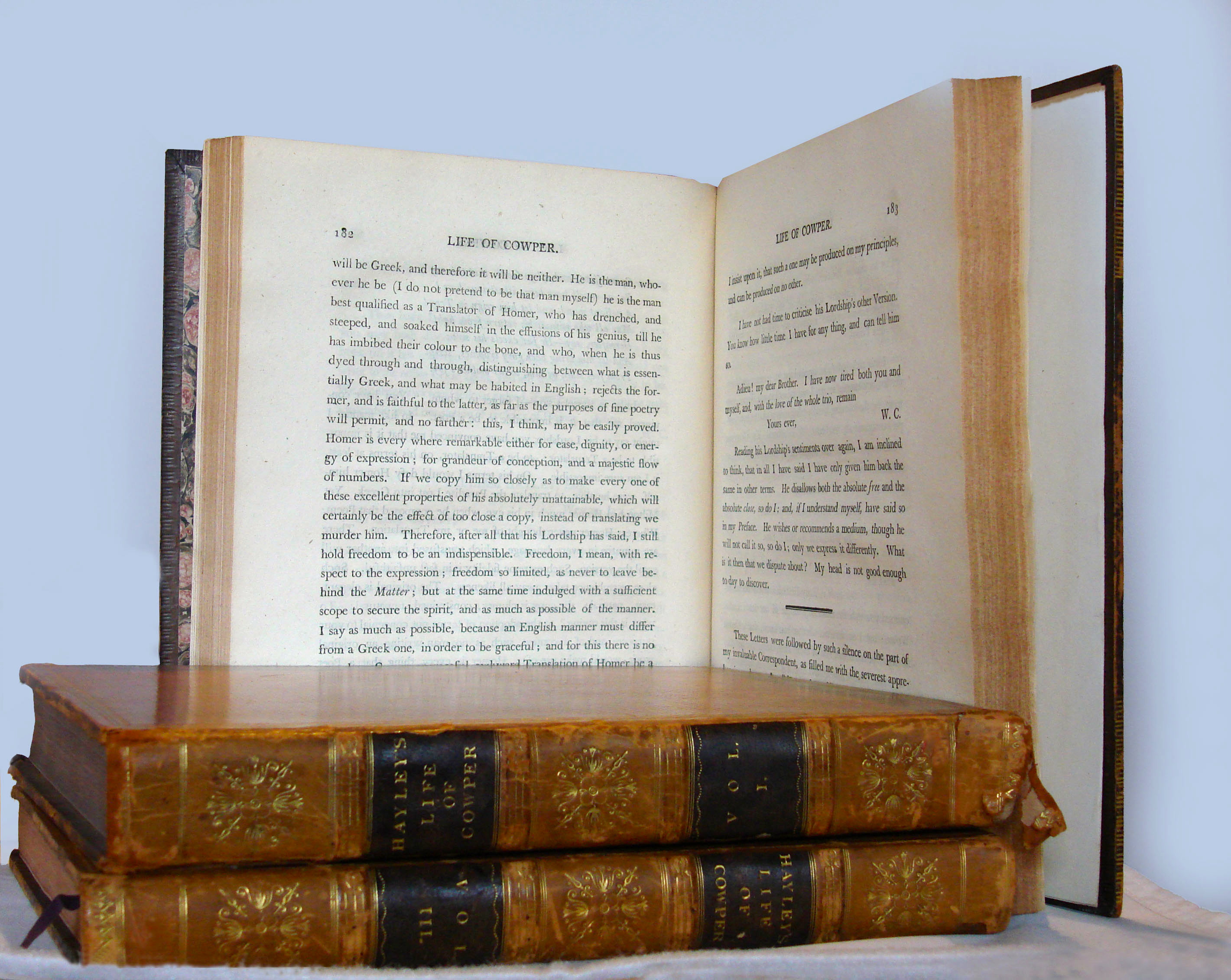
Item date: 1803, 1804
Date acquired: 2005
Grant Value: 1,500
Item cost: 2,400
Institution: Cowper and Newton Museum
Town/City: Olney
County: Buckinghamshire
Item date: Early 13th century
Date acquired: 2005
Grant Value: 5,000
Item cost: 52,000
Institution: Durham Cathedral
Town/City: Durham
This early 13th century manuscript Bible in one volume is one of about 250 medieval books lost from Durham Priory Library. Four inscriptions link the manuscript with named monks at Durham.
Item date: Early 19th century
Date acquired: 2005
Grant Value: 2,000
Item cost: 3,000
Institution: East Sussex, Brighton and Hove Record Office
Town/City: Lewes
County: East Sussex
In 1789, Douglas made an advantageous marriage to Catherine North, the eldest daughter of the former Prime Minister. The letters contain much information about life at Court and Princess Caroline of Brunswick, to whom Lady Sheffield and Lady Glenbervie were ladies-in-waiting.
Item date: 20th century
Date acquired: 2005
Grant Value: 2,000
Item cost: 7,000
Institution: Hull University Archives, Hull History Centre
Town/City: Hull
County: Yorkshire
Jean Hartley and her husband founded the Marvell press, which in 1955 first published poetry by Philip Larkin.
Item date: 20th century
Date acquired: 2005
Grant Value: 4,875
Item cost: 19,500
Institution: Hunterian Museum and Art Gallery
Town/City: Glasgow
This collection of 31 letters includes letters from Charles Rennie Mackintosh (1868-1928) and his artist wife, Margaret Macdonald Macintosh, to Jessie Newbery, the artist wife of the Director of the Glasgow School of Art.
Item date: 20th century
Date acquired: 2005
Grant Value: 10,000
Item cost: 76,375
Institution: John Rylands Library, University of Manchester
Town/City: Manchester
County: Lancashire
Elaine Feinstein's archive embraces the whole range of her literary output: poetry, fiction, prose, criticism, biography, translation and drama. It comprises manuscripts, annotated typescripts, marked proofs and correspondence with a large circle of writers including Martin Amis, A. S.
Item date: 20th century
Date acquired: 2005
Grant Value: 15,000
Item cost: 289,000
Institution: King's College London
Town/City: London
The Alanbrooke archive is primarily manuscript and large - 87 boxes. Alanbrooke's judgement was critical to the Allies' success in winning the Second World War and so these papers are of international repute and regularly consulted.
Item date: 1649
Date acquired: 2005
Grant Value: £4,950
Item cost: £4,950
Institution: Milton's Cottage Trust
Town/City: Chalfont St Giles
County: Buckinghamshire
This defence of regicide was printed on or before 13th February 1649, some two weeks after the death of King Charles I. In 'The Tenure', Milton is developing his theory of civil liberty.
Item date: 1758-60
Date acquired: 2005
Grant Value: 400
Item cost: 1,600
Institution: Newstead Abbey
Town/City: Nottingham
County: Nottinghamshire
This account book details work carried out by Hardstaff at Newstead Abbey between 1758 and 1760 for William, 5th Lord Byron, great-uncle of the poet, at the time when the so called 'Wicked' Lord Byron was poised for this descent into financial ruin.
Item date: 18th century
Date acquired: 2005
Grant Value: 300
Item cost: 1,200
Institution: Newstead Abbey
Town/City: Nottingham
County: Nottinghamshire
This is a group of six documents which pertain to a secret and unsuccessful attempt by the 5th Lord Byron to lease Newstead Park for 21 years from 25th March 1776. They illuminate the strained relations between the 5th Lord and his son.