Dr Alexander Lock, Curator of Modern Archives and Manuscripts, writes: John Donne (1572–1631) was one of the most popular poets of the late 16th and early 17th centuries and is considered to be one of the greatest Renaissance writers in the English canon.
Search FNL grants since 1931
Made around the year 1500, this manuscript contains the most complete collection of the works of Lewis of Caerleon, an astronomer and physician to the household of King Henry VII of England. Loyal to the Tudor cause, Lewis had been imprisoned in the Tower of London by Richard III. This manuscript includes his astronomical observations, some of which were made from the Tower itself.
Acquired under export regulations.
Mary Shelley’s ‘The Invisible Girl’ was published in The Keepsake annual for 1833, described as being ‘by the Author of Frankenstein’. The manuscript consists of four pages of autograph manuscript text, with autograph revisions throughout, paginated 5 to 8 (single bifolium, 230 x 185mm). The manuscript has the lower portion of the second leaf cut away, but there is no apparent loss of text.
In addition to being leading figures in the Midland Industrial Enlightenment the inventor and manufacturer Matthew Boulton (1728–1809) and the entrepreneur printer and typographer John Baskerville (1707–75) were personal friends. A mark of their mutual esteem is the magnificent copy of Baskerville’s celebrated 1763 Cambridge Bible.
The R.S. Thomas Research Centre at Bangor University, the poet’s alma mater, houses a unique collection of R.S. Thomas manuscripts, letters, journals and memorabilia, built up over the last two decades, an archive which in normal times receives many visitors from the UK and abroad. The present purchase represents a major addition to our already substantial holdings. We believe it to be, in fact, the most significant collection of R.S. Thomas material which remained in private hands.
Emily A. Atkinson sat in a lecture hall 131 years ago assiduously taking notes on mental and moral philosophy. She was one of the first cohort of students to pass through Royal Holloway College, founded three years before, in 1886, for the education of women. The lecturer was John Henry Muirhead, freshly appointed to the post, in an early step in a long teaching career. The notes form a small volume bound in marbled paper, signed by Atkinson inside the front cover. Covering topics such as “Ethics”, “Plato’s Republic” and “Butler’s Sermons on Human Nature” they date from 8 October 1889 until 8 May 1890.
This remarkable resource comprises 265 book illustrations (from volumes including Imperial Rome, Prehistoric Britain, Norman Britain and illustrations for an edition of the Holy Bible), 195 working drawings,102 sketches, 38 sketchbooks, 34 diaries and 80 letters. The archive is multi- and inter-disciplinary, traversing archaeology, art, and the historiography of the archaeological discipline.
During 2020 FNL received an exceptional, restricted gift in kind, with a value of £500,000, from the Chatsworth Settlement in the form of The Book of Lismore, a 15th century medieval Irish decorated manuscript and considered one of the Great Books of Ireland. FNL was involved because it is one of a very limited number of bodies listed in Schedule 3 of the Inheritance Tax Act 1984. As such FNL can facilitate gifts to eligible institutions of previously exempted works of art without giving rise to a tax charge on the donor family, and it can enable acquisitions by eligible institutions of artefacts accepted in lieu of Inheritance Tax. FNL received the manuscript as a restricted gift and gave it in turn to the UCC Educational Foundation, a UK registered charity established for the benefit of University College Cork.
Winchester has a special connection with John Keats, who spent two months in the city in the summer and autumn of 1819.
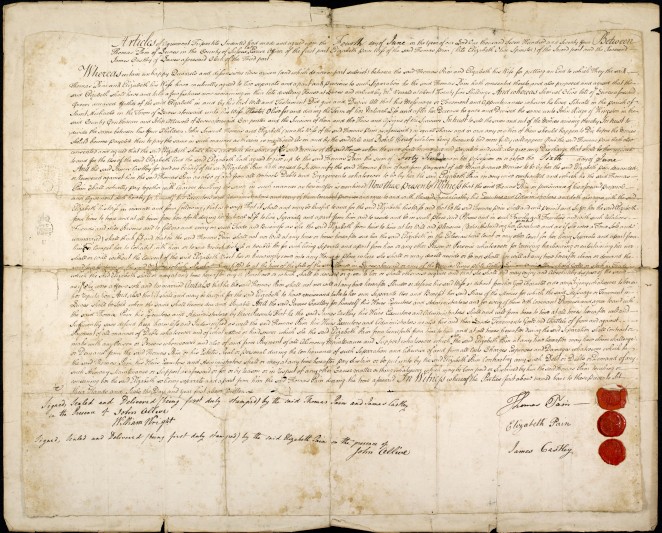
The deed relating to the Sharington family of Lacock Abbey is an important acquisition for us and is now reunited with the Lacock Archive, which was also purchased with the support of Friends of the National Libraries. With other documents in the archive it enhances our understanding of the family’s history and the development of the estate.
The document highlights the extent and value of the manors and confirms that, regardless of any other documents issued by Sharington, the manors and lands “at all times hereafter … shall continue, remain and be unto the said Edward Bynton, his heirs and assigns.” The manors included 120 messuages, 4,000 acres of land, 4,000 acres of pasture, 4,000 acres of meadow, 200 acres of wood, 2,000 acres of heath and furze and £4 of rent with appurtenances.
Henry Sharington was the younger brother of Sir William Sharington, who bought the estate the Lacock Abbey estate from Henry VIII in 1540. Sir William Sharington was a prominent Tudor courtier and a wily political operator, eventually becoming Under-Treasurer of the Bristol Mint, which he defrauded, keeping the profits to invest in rebuilding Lacock Abbey.