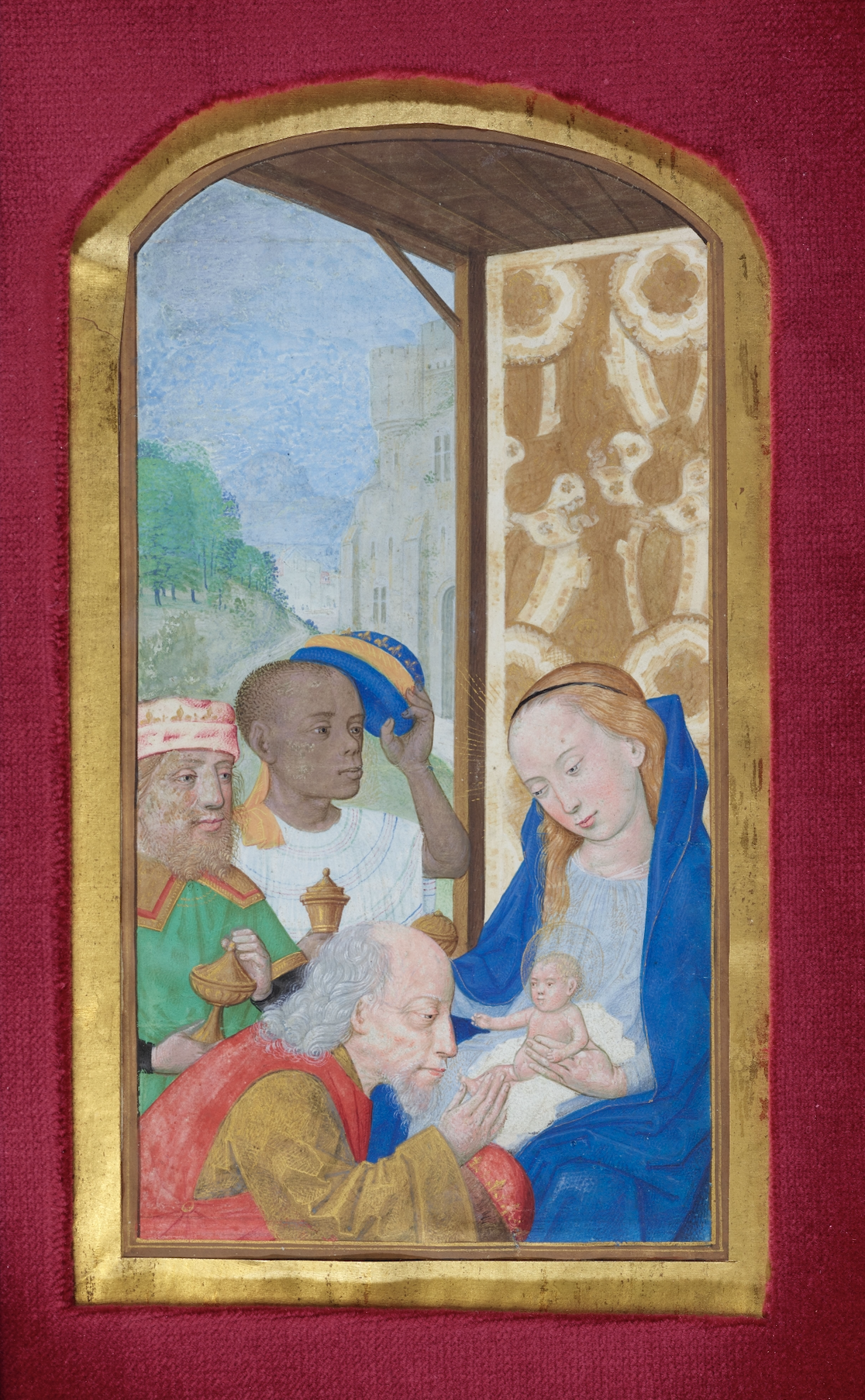
The Hours of Louis Quarré is a lavishly illustrated manuscript, probably created in Ghent towards the end of the 15th century. By the time the manuscript was acquired by Francis Douce in 1832 (and bequeathed to the Bodleian by him in 1834), several of its full-page miniatures had been removed. The Bodleian does not routinely seek to acquire single leaves and miniatures, but in this case it recognised the value of reuniting the miniatures with the original volume.
Search FNL grants since 1931
Item date: after 1488
Date acquired: 2022
Grant Value: £10,000
Institution: Bodleian Libraries
Town/City: Oxford
County: Oxfordshire
Item date: 1631
Date acquired: 2022
Grant Value: £6,000
Item cost: £11,000
Institution: Bodleian Libraries
Town/City: Oxford
County: Oxfordshire
Item date: 1556
Date acquired: 2022
Grant Value: £1,500
Item cost: £1,500
Institution: Bexley Libraries, Heritage and Archive Service
Town/City: Bexleyheath
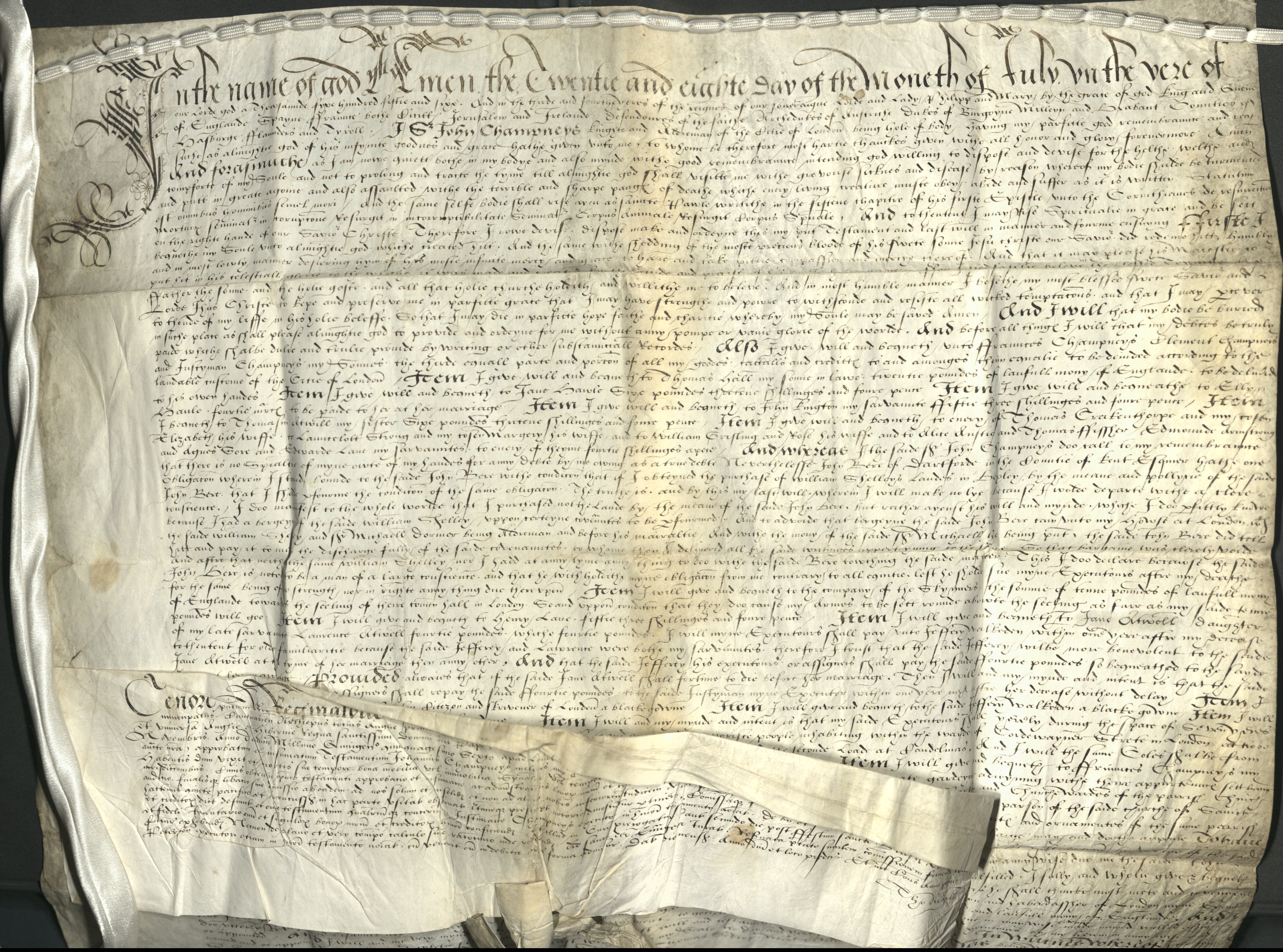
Sir John Champneys was Lord Mayor of London in 1534. He began the building of Hall Place in 1538, at the same time he secured a 100 year lease of the Manor of Bexley from Thomas Cranmer, Archbishop of Canterbury. Shortly before the primate had exchanged it with Henry VIII for various other properties in Kent. Sir John built Hall Place using stones from a deserted monastery. Today the house is a major historical monument in the London Borough of Bexley. The will is significant because the formulation indicates that Sir John was Catholic in sympathies.
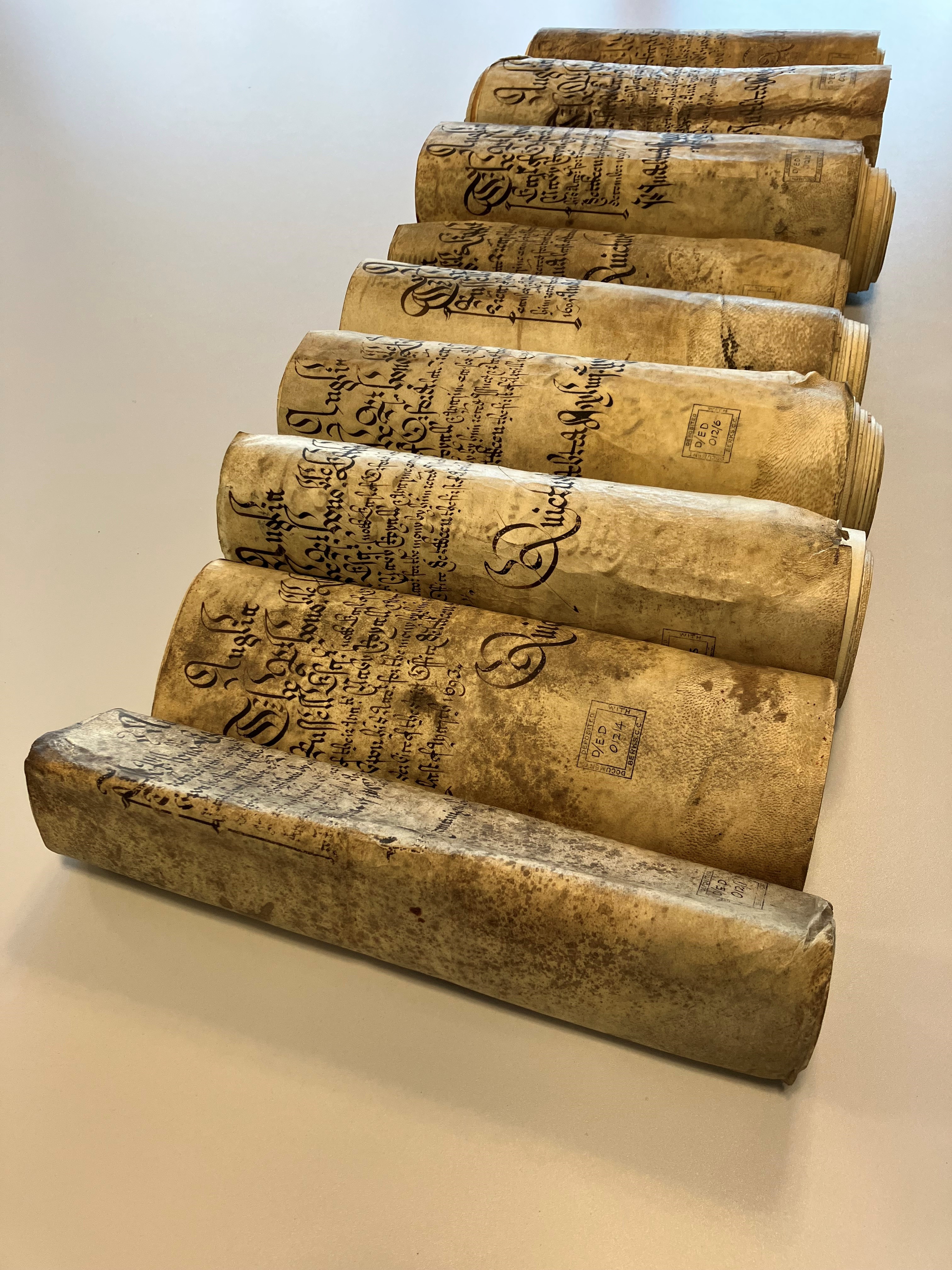
Item date: 1689-1699
Date acquired: 2022
Grant Value: £2,000
Item cost: £2,000
Institution: Royal Berkshire Archives (formerly Berks Record Office)
Town/City: Reading
County: Berkshire
These rolls are presumed to be personal copies of Edward Russell (1653-1727). They are formal documents, written with iron gall ink in a court hand onto parchment membranes. Each roll consists of many membranes that are sewn together.
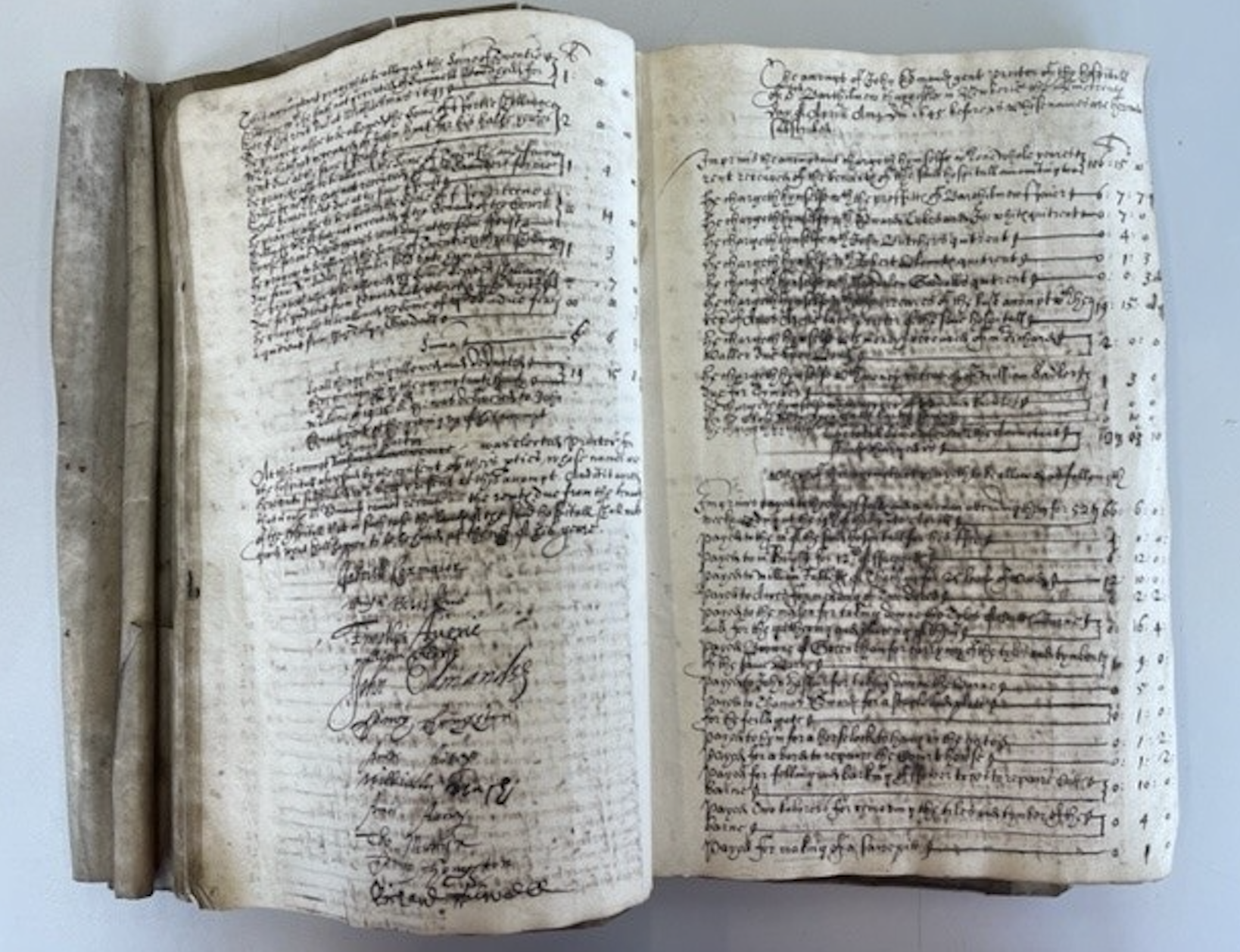
Date acquired: 2022
Grant Value: £2,500
Item cost: £2,849
Institution: Royal Berkshire Archives (formerly Berks Record Office)
Town/City: Reading
County: Berkshire
Proctors’ account book for St Bartholomew’s Hospital, Newbury, Berkshire, 1624-1697, together with three deeds for properties in Northbrook Street, Newbury, 1689, 1733 and 1796. The account book relates to an ancient charity within the town of Newbury, Berkshire. The Hospital of St Bartholomew is first recorded in 1215, when King John granted it the right to hold a two-day fair. The hospital was an almshouse, though, at the Reformation, it became associated too with the town’s grammar school (now a state-funded academy). By the end of the 16th century, its affairs were managed by the town’s corporation, and in 1837 it was merged into the Newbury Municipal Charities. The hospital was rebuilt in 1698 and this building still stands in Argyle Road, Newbury.
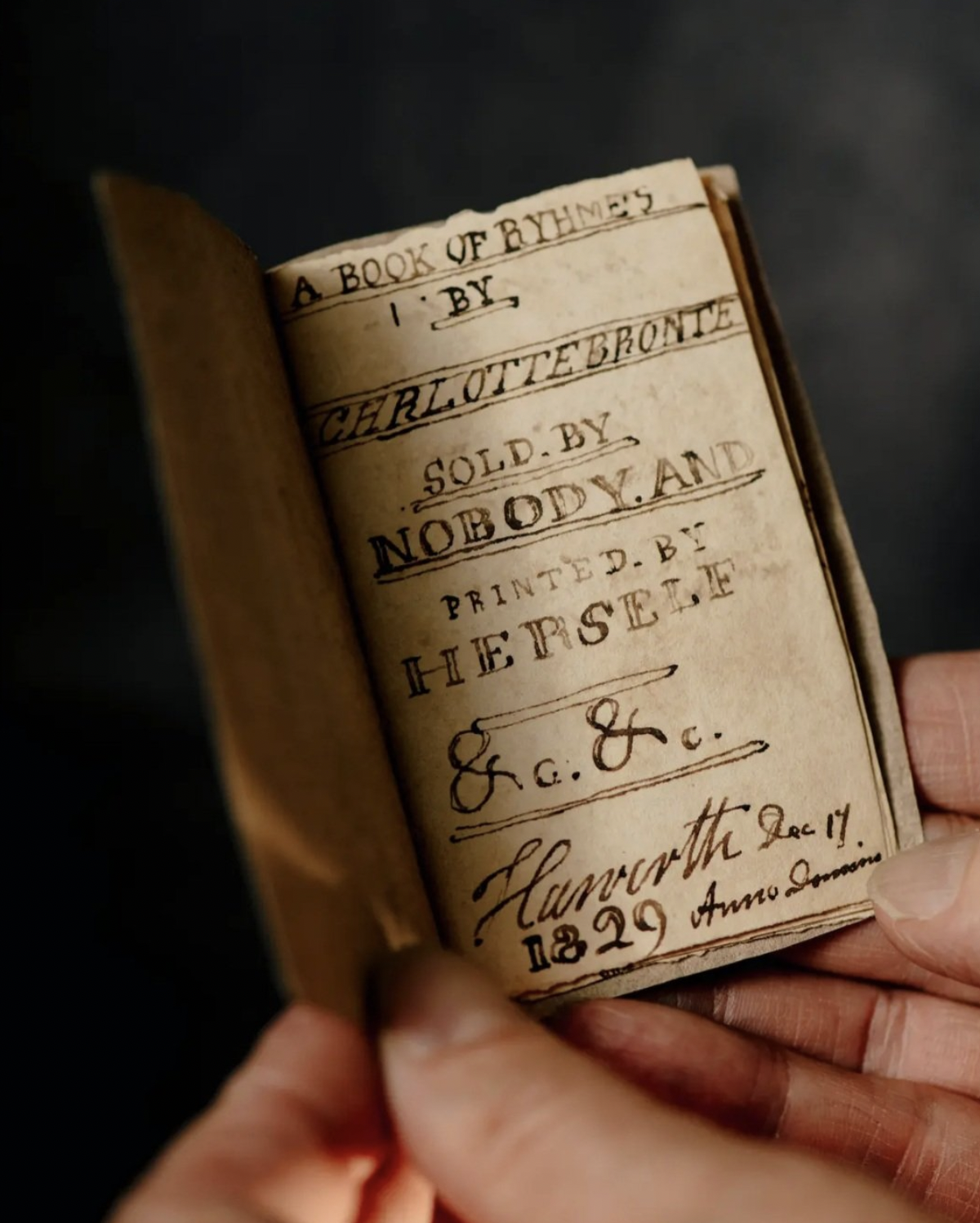
Item date: 17 December 1829.
Date acquired: 2022
Grant Value: £950,720
Item cost: £950,720
Institution: Brontë Parsonage Museum [Brontë Society]
Town/City: Haworth
County: West Yorkshire
This 'little book' written by Charlotte when she was 13, was thought to be the last of the little books still in private hands. In 2021 FNL donated 7 little books from the Blavatnik Honresfield Library to the joint ownership of the Brontë Parsonage Museum, the British Library and the Brotherton Library (University of Leeds). FNL was determined to raise the funds needed to buy the manuscript and donate it to Brontë Parsonage and successfully raised the $1.25m required within just a few months thanks to many generous donors.
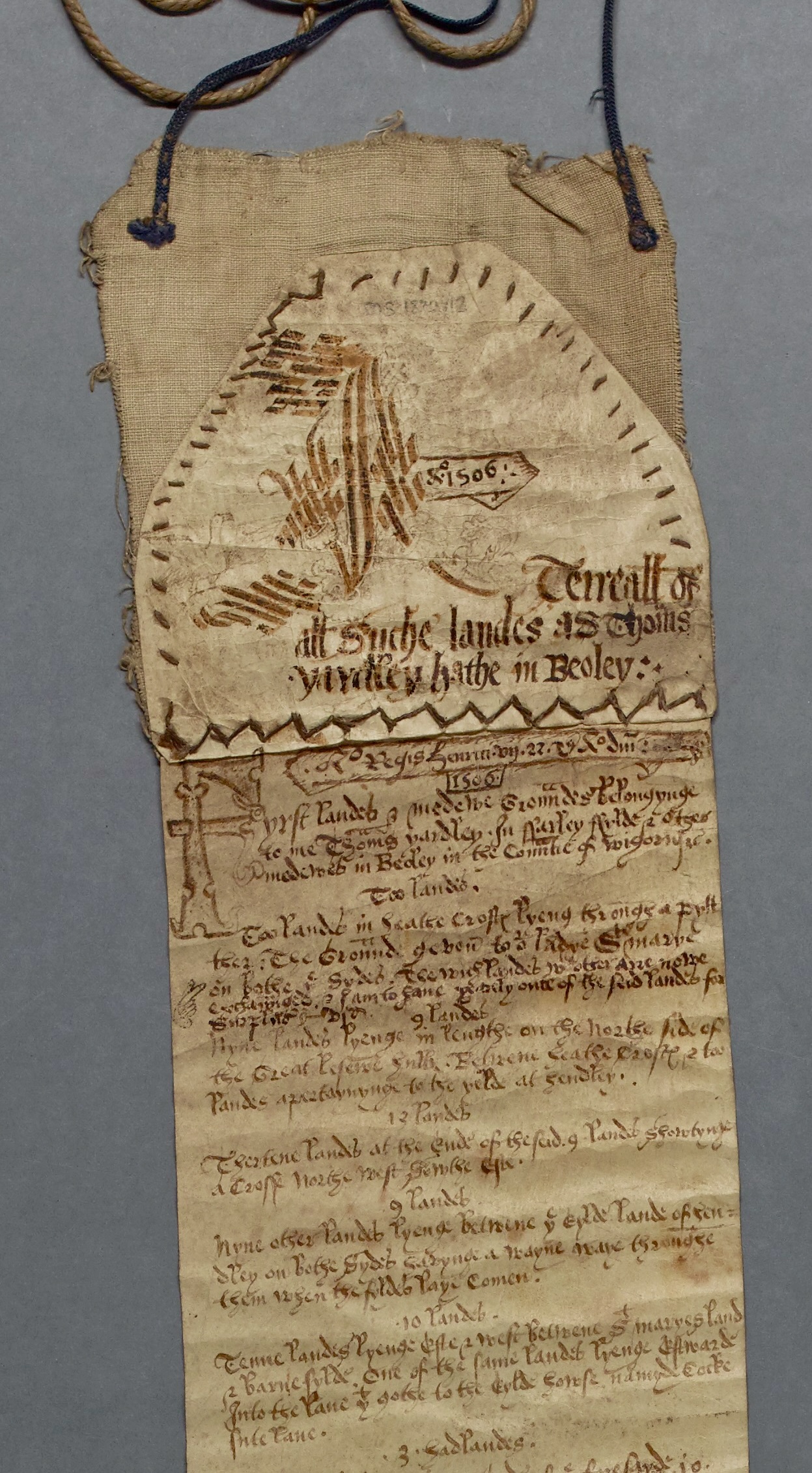
Item date: 1506
Date acquired: 2021
Grant Value: £9,568
Item cost: £20,800
Institution: Worcestershire Archive Service
Town/City: Worcester
County: Worcestershire
The terrier is a beautifully preserved account of Thomas Yardley’s land with a few drawings and scratchy cartoon letters, on two pieces of parchment sewn roughly together, and then again sewn on a cloth binding at the title end. Some twenty-four estates are referred to in the roll. It is extremely valuable in terms of information on this area of Worcestershire for which we hold very little from this period.
Item date: c.1923
Date acquired: 2021
Grant Value: £3,500
Item cost: £17,960
Institution: Victoria & Albert Museum: Wedgwood Collection
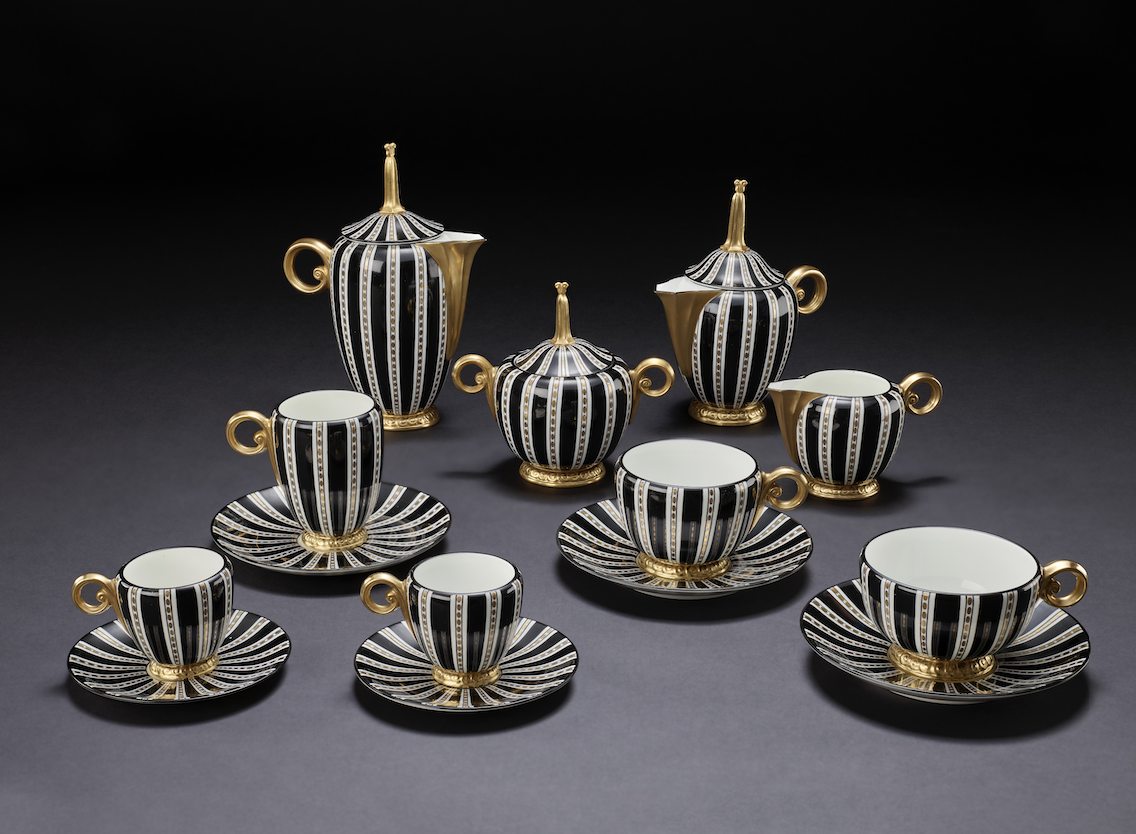
This set of design drawings for the ‘Campanula’ tea and coffee service, which was designed by French designer Paul Follot (1877-1941) for Wedgwood. There are ten drawings in the set, drawn in pencil on tracing paper and paper. The design drawings and the extraordinary finished pieces, which were also acquired, fill an important gap in the V&A Wedgwood Collection, and are a wonderful example of the Wedgwood company’s tradition of working with innovative artists to create their designs. The service was also acquired from the same sale - it is the only known example of the 'Campanula' pattern and shape in existence.
Item date: 17th century
Date acquired: 2021
Grant Value: £3,000
Item cost: £6,375
Institution: Thomas Plume's Library
Town/City: Maldon
County: Essex
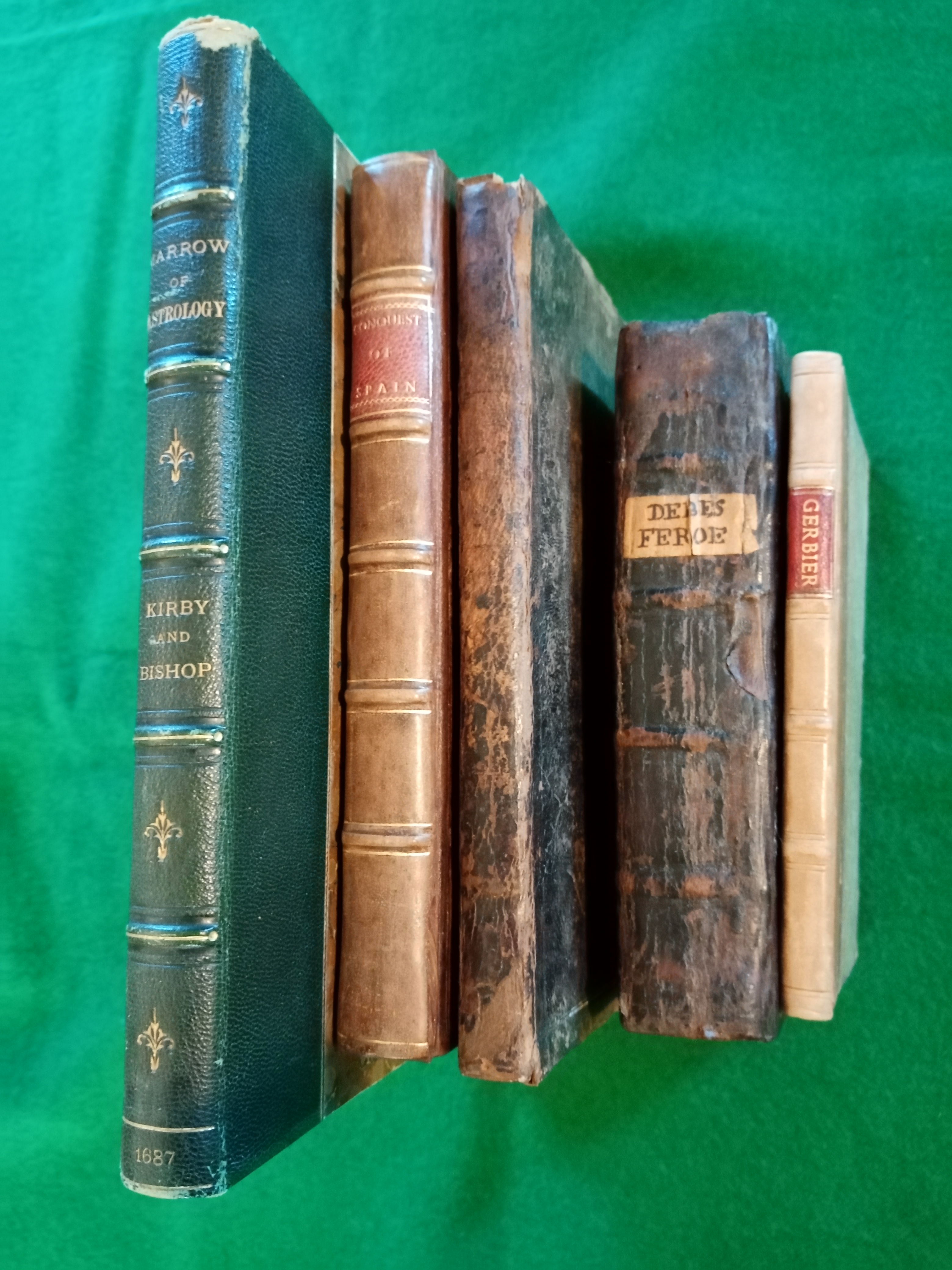
Thomas Plume's Library is an extraordinary survival. In 1704 Dr Thomas Plume (1630-1704), Archdeacon of Rochester, bequeathed his collection of c. 8,000 books to his birthplace, Maldon, to establish a public lending library in the redundant Church of St Peter.In the early 20th-century, when Thomas Plume’s Library was still a lending institution, many books went missing. Since 1987 the Trustees have been actively buying replacement books – in a few cases the originals.
Item date: 24 July 1849
Date acquired: 2021
Grant Value: £483
Item cost: £483
Institution: Stornoway Historical Society
Town/City: Stornoway
County: Western Isles
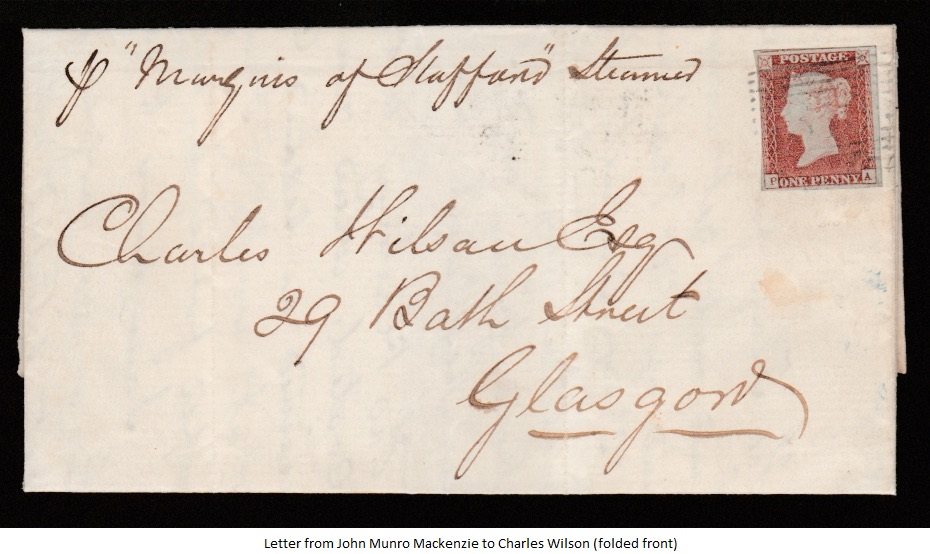
The writer of the letter was John Munro Mackenzie, Chamberlain of the Lews from 1848 to 1854, and the recipient was Charles Wilson, a distinguished architect based in Glasgow who had designed Lews Castle. The letter described delays in the final completion of the plastering and decorating of the new Lews Castle which, the Chamberlain hoped, would be ready in time for an imminent visit by Sir James Matheson, owner of Lews Castle and proprietor of the Island of Lewis from 1844, with family and guests. The visit would likely have been one of the first by Sir James to his new stately home.